Честит имен ден -2! / Happy Namesake Day -2!/ Heureux Jour Onomastique -2!
 Тортата / The cake / Le gâteau
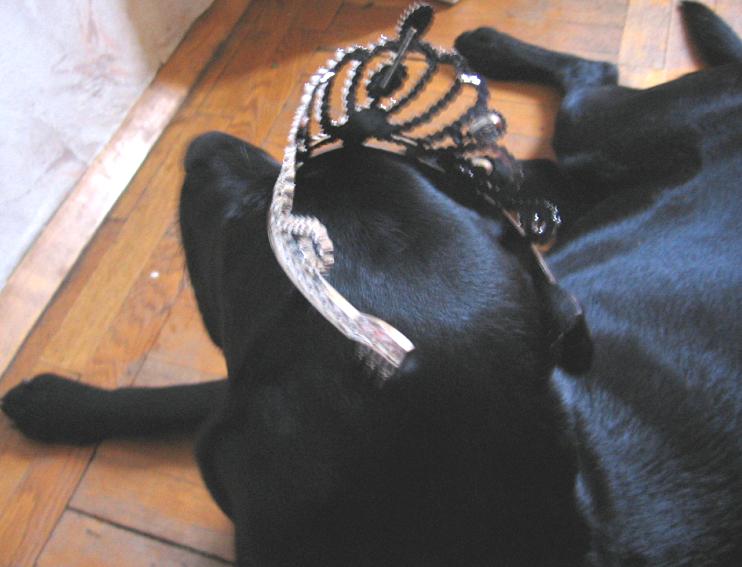
На 6 май празнуват Георги, Гергана и нашата Грима! Етимологията на името отвежда до старонорвежкия – женската форма на Grim, значещ „маска”, но може и да се използва като словообразуващ елемент: -grima (моряк), -grima (бурен, буен, пламенен). И да внесем смут ще добавим, че от староанглийски –грима означава „призрак”. Не я бъркайте с героя на Толкин от „Властелина на пръстените”! Всъщност рожденото име на другото „черно куче” е Бета. То е с гръцки корен \b(e)-ta\, втората буква от гръцката азбука или средноевропейският вариант на Бет. Наричайте я както искате, просто Честит имен ден Бета-Грима-Гримчо!
 The 6th of May is celebration day for Georgi (George in Bulgaria), Gergana and our Grima! The etymology of the name lead to the Norse - female Viking name, Feminine form of Grim, meaning ‘mask’, but it could be also used in compounds with the popular second components: -grima (fisher), -grima (fierce, wild, impetuous). Just to add confusion, the Old English -grima means 'ghost'. Not to be confused with the fictional character in J.R.R. Tolkien's The Lord of the Rings. But as a matter of fact the other “black dog” is nee Beta. The girl's name Beta \b(e)-ta\ is of Greek origin. Second letter of the Greek alphabet. Also a middle-European variant of Beth. Call it whatever you want, just Happy Namesake day Beta-Grima-Grimcho!
 Le 6 mai est fêté par ceux qui portent le nom Guéorgui (George en Bulgarie), Guérgana et notre Grima ! L’étymologie du nom conduit au norois – le féminin de Grim, qui veut dire « masque », mais aussi peut-on l’employer comme un second élément de noms composés : -grima (pêcheur), -grima (énergique, acharné,e). Et pour semer la confusion on peut ajouter que Grima, de normand, se traduit comme « fantôme ». Ne la confondez pas avec le héros tolkienien! Mais en fait on sait que l’autre « chienne noire » est née Béta, un nom qui provient de l’origine grecque. La deuxième lettre de l’alphabet grec et la variante de Beth de l’Europe moyenne. Appelez-la comme vous voulez, simplement Bon Jour onomastique Beta-Grima-Grimcho!
 "You're sweet like chocolate girl
Sweet like chocolate
You bring me so much joy
You're sweet like chocolate " - Shanks & Bigfoot


 mmmmmm!
 --> Grima * Glory <--
Labels: name non, sister